What we make.
We scope around what the project needs, so you’re not paying for a package with things in it you’ll never use.
What each one includes
Logo and brand identity
Sheila draws the mark first, then picks the type and color that go with it and writes down how to use all three.
See it on Rock and Pond Consulting- Your mark, drawn from scratch.
- The type and color that go with it.
- The rules that keep it looking like itself on a sign and on a proposal cover.
- Every file, handed over.
Website design and development
You click through a draft of the site before anyone builds it. Then we build it, with an editor your team can run day to day.
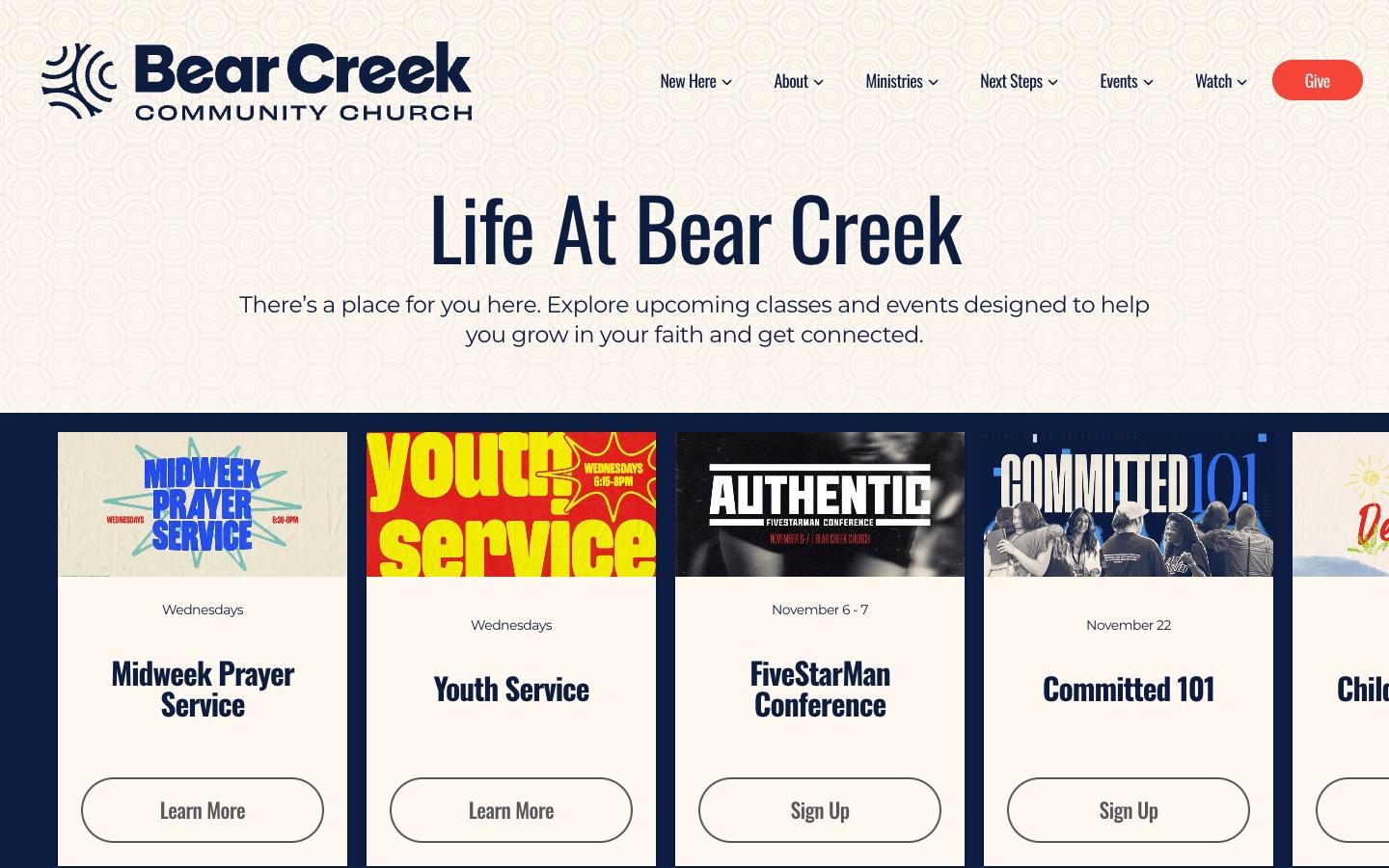
See it on Bear Creek Community Church- A sitemap, agreed in writing before anyone draws anything.
- A clickable draft you react to before anything is built.
- A staging link while the build is still rough.
- An editor your team can run.
- Built and tested against WCAG 2.2 AA before launch.
- Training for your team, and written instructions to keep.
Print and signage
Signage, event materials, and info cards, in the same type and color as the rest of your identity, so what's on the wall matches what's on the screen.
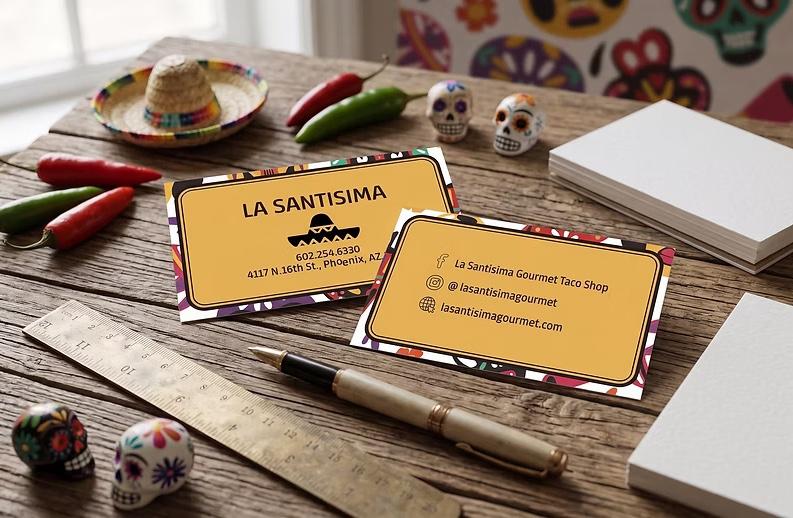
See it on La Santisima Gourmet Taco Shop- Signage, event materials, and info cards.
- Menus and business cards.
- Set in the same type and color as the rest of your identity.
- Delivered print-ready, with the files you'd need to reprint or revise.
Ongoing support
Monthly maintenance and small updates, handled for you. Your site keeps running without it, and we built it that way on purpose.
See it on Bear Creek Community Church- Monthly maintenance and small updates.
- Posting what you send us, and adding a page when you need one.
- Optional. Your site keeps running without it.
What someone checks before they ever walk in
A visitor thinking about your church has already been on your website, probably late on a Tuesday. We know what they were after because we have spent years of Sundays in churches, and it’s a specific list: what you believe, when the services are, whether there are small groups, whether there’s a children’s ministry that will watch their kid, who the pastors are, and whether they can watch a sermon first.
A thin site fails that quietly. Nobody writes in to say they couldn’t find the service time.
So we plan a church site backwards from that list, and build the events and service times so the office can change them on a Thursday afternoon. The first step is finding out what’s on yours.
Design and development are one job here.
Sheila designs the site and Thomas builds it, and what you hire is the finished thing, working. We don’t sell a design file for somebody else to assemble later, because that hands you the harder half of the work and calls it delivered.
When a project needs more than a website
- A members area behind a login
- A booking form
- A database the office runs from
It's the same two people building that too.
How we price it
We price each project once, after the call, when we both know what it is. You’ll hear a range on that call and get a firm number in writing before you commit to anything, and the number doesn’t move unless the scope does.
If the range and the budget don’t meet, we’ll say so on the call and help you find the version that works. Often that’s a smaller first phase that grows when you’re ready.
9 in 10 of the top million homepages had detectable WCAG failures.
The WebAIM Million, 2026.
Accessibility comes with the build.
WebAIM tests the top million homepages every year, and in 2026 it found detectable WCAG failures on more than nine in ten. We build and test against WCAG 2.2 AA as we go, and every site gets a screen reader pass before launch. If you’re grant-funded, we can write down what we tested and what we found, which is usually what the application asks for. We won’t tell you a site is certified or compliant, because nobody can promise that about a site people keep adding to. Whether a law applies depends on how you’re funded, so we ask on the call, and tell you when it’s a question for a lawyer.
Checked on every site
- Keyboard navigation
- Visible focus states
- Color contrast
- Semantic markup
- A screen reader pass before launch
The questions that come up before anyone says yes.
It depends on the size of the project, so we scope yours on the first call instead of quoting an average here. A logo or a print piece usually moves faster than a full site. What stretches a timeline is almost never the build. It's content: photos nobody has taken, staff bios nobody has written, a sermon archive somebody has to go and find. We tell you at the start what we need from you and when, and plan the schedule around it.
You do, all of it, and it's in writing before the project starts rather than after. The long version is on the About page, including what happens to your site if you ever stop working with us.
Yes, if the site needs regular updates. Some don't, and we won't sell you an editor you'd never open. When yours does, a volunteer can change a service time, post an event, or swap a photo without touching code or calling us. We train whoever holds the login, and write it down for whoever holds it after them.
No. The studio is for all three: a church, a nonprofit, or a small business. A food bank and a two-truck plumbing company have more in common with each other than either has with a funded startup: one person wears four hats, the money is real money out of a real account, and nobody has an afternoon to spend learning a new tool.
Yes. The platform is decided per project: one you already use, one you're asking for, or something we build. Bear Creek chose theirs, and we designed and built the site on it.
Yes. Rock and Pond came to us for a logo and built their own site around it, and La Santisima asked for a menu and a business card. Neither project had a website in it, and both are written up on the Work page.